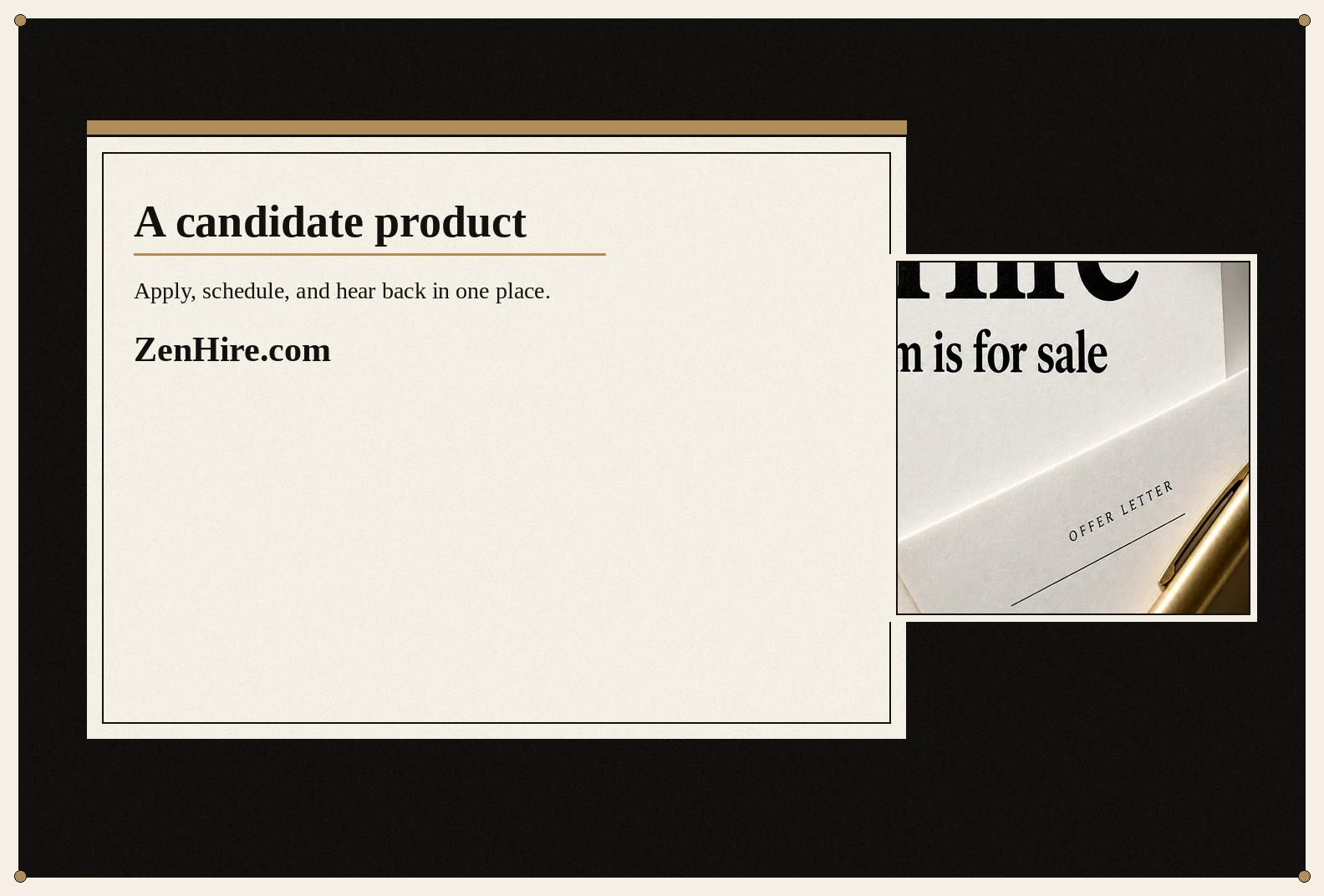
I would build ZenHire.com as the place a candidate opens when an application is active. Most hiring software is purchased by an employer, so the candidate experience becomes a secondary surface inside a larger system. That leaves applicants searching across email threads for schedules, preparation notes, forms, and decisions. A focused product could give every candidate one clear page for the relationship with a prospective employer.
The first version would be deliberately small. A candidate receives a secure link after applying. The page shows the role, current stage, next action, contact, and expected timing. It collects only the information needed for that step. The employer controls the hiring workflow, while ZenHire presents it in language a person outside the company can understand. There is no need to expose an internal pipeline or make the candidate learn recruiting software.
The product should work alongside systems employers already use. Lever demonstrates how applicant tracking and candidate relationship functions can share a system of record. ZenHire would not need to replace that record on day one. It could begin as the candidate-facing layer, taking approved stage data from an ATS and returning confirmations, completed forms, and communication preferences.
Scheduling is an obvious early job, but it should be handled as part of context rather than a bare calendar link. A candidate needs to know who will attend, how long the conversation will run, what format to expect, and whether preparation is required. A reschedule should preserve those details and notify the right people. The familiar booking pattern from Calendly shows why reducing coordination steps matters, while the hiring-specific layer supplies the meaning around the meeting.
A product candidates can trust
I would keep account creation optional until it produces a clear benefit. A secure link can handle a single application. A lightweight account becomes useful when a candidate wants to manage several conversations, reuse personal preferences, or keep a record of documents. The product must explain what an employer can see, what remains private, and how long information is retained. Candidate trust should be part of the design, not a policy added after launch.
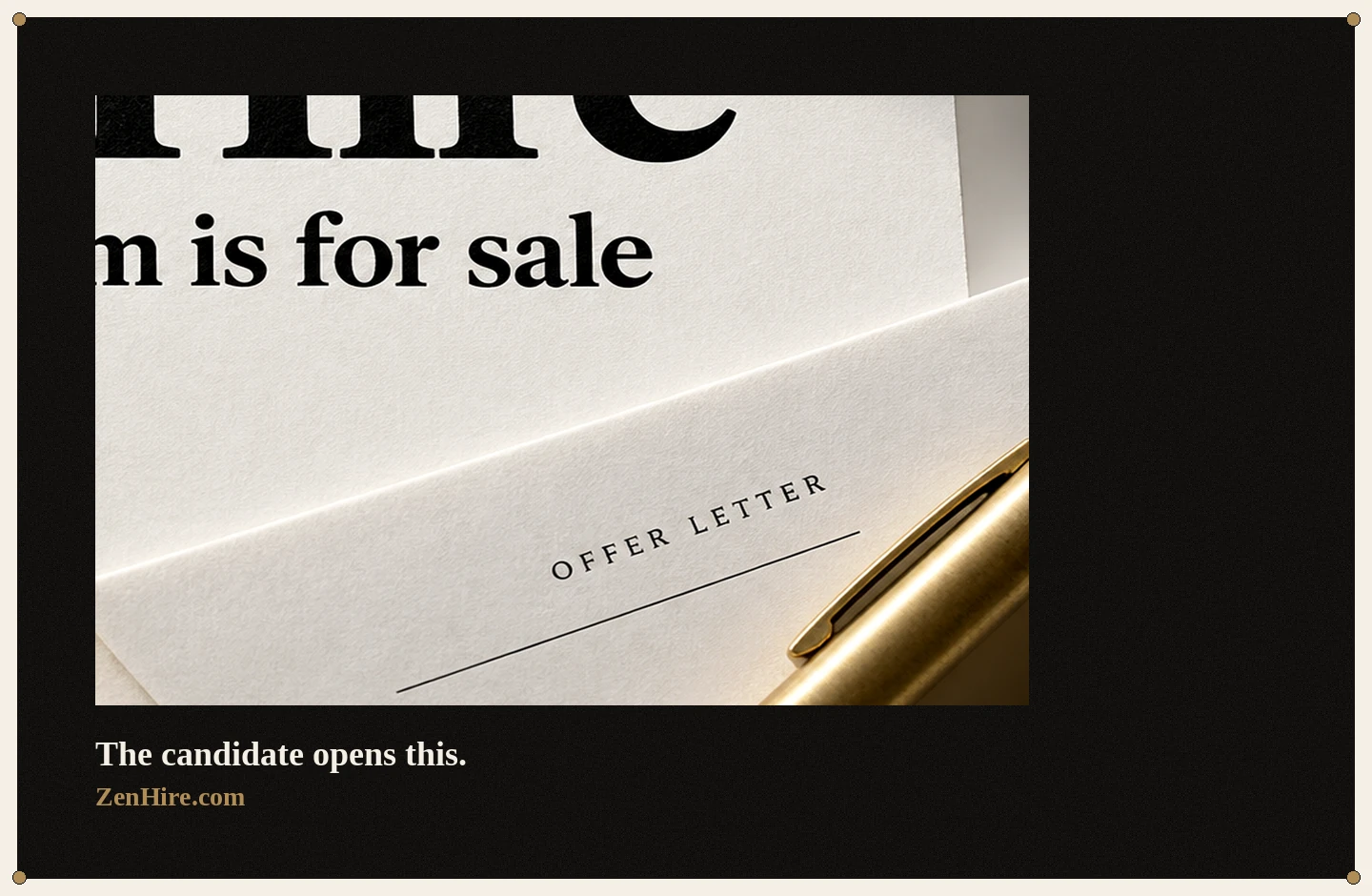
Status language needs care. Internal stages often sound clinical or ambiguous to applicants. “Manager review” can be translated into a short explanation with an expected date. A rejection should not be disguised as an endless review. An offer should separate the celebratory message from the documents and decisions that follow. Workable offers a broad view of employer recruiting workflows; a ZenHire candidate layer could specialize in turning those steps into clear external communication.
The employer dashboard would focus on exceptions. Recruiters should see which candidates lack a confirmed interview, which forms remain incomplete, and where a promised update is late. Templates can help, but each message must still name the role, stage, and relevant person. The product should make attentive communication easier without making every company sound identical.
I would price and package the product for the employer, since the employer initiates the process. Candidates should not pay to receive information about an application. A small company could begin with a simple hosted portal, while a larger team might connect its ATS, scheduling system, identity provider, and reporting. The underlying promise remains the same at each tier: one reliable place for the candidate to understand what happens next.
From application to answer
The strongest expansion would follow the candidate's actual sequence. Interview preparation can include a panel outline and accessibility contact. References can be requested with clear consent. Offer details can be presented with a checklist and a place for questions. Pre-start tasks can move to the employer's onboarding system when the candidate accepts. ZenHire should own clarity between stages, not attempt to own every HR function.
Modern recruiting platforms such as Ashby show how much structured data now sits behind hiring. A candidate product can use a careful subset of that data to improve communication while protecting internal notes and other applicants. The integration contract should be explicit about which events trigger messages and which changes require a recruiter to review before anything is sent.
I have spent decades working from home and building companies through online communication. That makes me sensitive to the difference between a message being sent and a person actually understanding it. Hiring magnifies that difference because a schedule change or silent week affects family plans, current employment, and confidence in the employer. I would want ZenHire to reduce that uncertainty with specific, timely information.
The name fits because it sounds like a destination within the hiring process, not another internal acronym. ZenHire.com could appear in an invitation without needing a long explanation. My pitch is a candidate product that respects attention: every active application, appointment, request, and answer in one composed place, built to complement the employer's system rather than compete with it.